Dr Craig Spencer Wikipedia, Biography, Age, Nationality, Education, Qualifications, Career, Research, Wife, Net Worth, Family

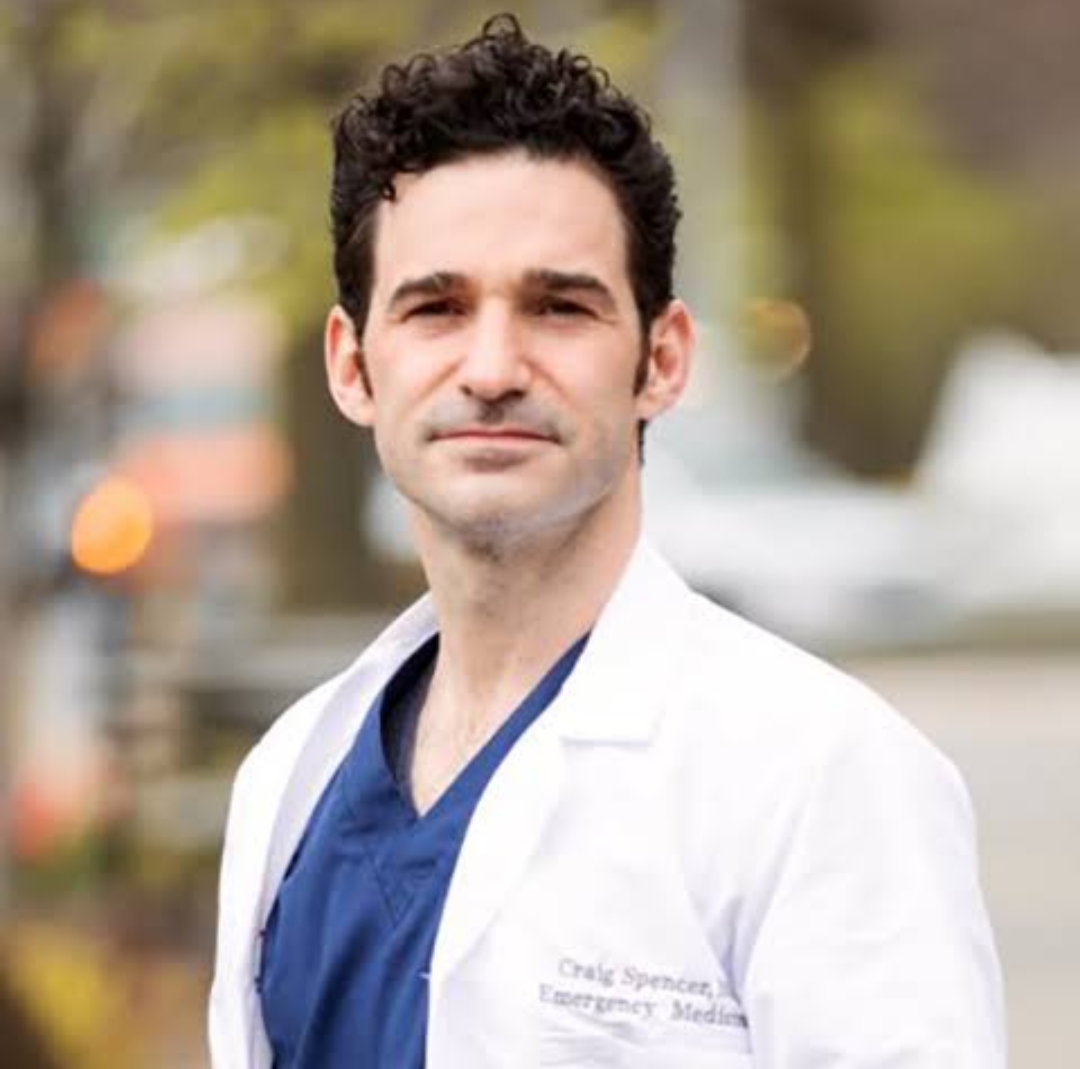
Dr Craig Spencer Wikipedia, Biography
Dr. Craig Spencer is an emergency medicine physician and public health expert renowned for his extensive work in global health and humanitarian response. He serves as an Associate Professor of the Practice of Health Services, Policy, and Practice at Brown University School of Public Health.
Dr. Spencer’s international experience includes serving as a field epidemiologist in Africa and Southeast Asia, focusing on projects related to access to medical care and human rights. Notably, he coordinated Doctors Without Borders’ (MSF) national epidemiological response in Guinea during the Ebola outbreak.
In 2014, while working with MSF in Guinea, Dr. Spencer contracted the Ebola virus but made a full recovery. His experience as an Ebola survivor has significantly influenced his advocacy for understanding and treating epidemic diseases in developing nations.
Dr. Spencer has also provided medical care in various regions, including the Caribbean, Central America, West and East Africa, and most recently aboard an MSF medical search and rescue boat in the Mediterranean.
Early Life and Education
Dr. Spencer was born in the United States and developed an early interest in medicine and public health. He attended Grosse Pointe North High School, where he was an active member of the National Honor Society and played hockey.
After high school, he pursued higher education at Wayne State University School of Medicine in Detroit, graduating in 2008. During his time there, he was involved in various humanitarian activities, which sparked his interest in global health.
Following medical school, Dr. Spencer completed his residency in Emergency Medicine at the New York Hospital of Queens in Flushing, New York. He furthered his education by earning a Master of Public Health (MPH) degree with a focus on Forced Migration and Refugee Health from Columbia University’s Mailman School of Public Health.
Career
Dr. Craig Spencer’s career is defined by his contributions to both emergency medicine and global public health. Over the years, he has built a distinguished career with a strong focus on humanitarian aid, epidemic response, and public health education. His professional journey encompasses a combination of clinical practice, fieldwork in crisis zones, and academic endeavors, which together have shaped his significant impact on global health initiatives.
Early Professional Experience
After completing his medical education and residency, Dr. Spencer began his career in emergency medicine at the New York Hospital of Queens. During this time, he gained extensive experience in handling acute medical cases in a diverse urban setting.
Dr. Spencer’s early professional career also saw him working with non-governmental organizations (NGOs) in humanitarian settings, which eventually led him to join Doctors Without Borders (MSF).
Humanitarian Work with Doctors Without Borders
Dr. Spencer’s tenure with Doctors Without Borders is one of the most defining aspects of his career. In 2014, he was stationed in Guinea as part of MSF’s effort to combat the Ebola outbreak. This period of his career not only highlighted his medical expertise but also placed him at the forefront of one of the most challenging global health crises of the 21st century. His role in Guinea was critical, as he was involved in the coordination of field epidemiology and assisting in the treatment and care of patients affected by the Ebola virus.
Contracting Ebola and Recovery
In an unexpected turn, Dr. Spencer contracted Ebola in October 2014 while working with MSF in Guinea. His case gained widespread media attention, as he became the first person to be diagnosed with Ebola in New York City. After his diagnosis, Dr. Spencer was treated in a specialized isolation unit at Bellevue Hospital in New York. Fortunately, he made a full recovery after several weeks of treatment, becoming one of the notable survivors of the outbreak.
Academic Contributions and Public Health Education
After recovering from Ebola, Dr. Spencer shifted his focus toward public health education and research. In 2016, he became an Associate Professor at the Brown University School of Public Health. At Brown, he teaches courses on global health, humanitarian response, and the history of public health, with a particular emphasis on epidemic preparedness.
Dr. Spencer’s academic work also includes significant contributions to global health policy. He has published widely in academic journals, writing about topics ranging from epidemic response and forced migration to the challenges of humanitarian medical care. He frequently speaks at conferences and forums on the topics of global health, pandemic response, and health equity.
Current Role and Focus on Pandemic Preparedness
Today, Dr. Spencer’s professional focus is squarely on pandemic preparedness and response. He works with organizations and governments worldwide to improve their readiness for future outbreaks of diseases like Ebola, Zika, and COVID-19. As an expert in the management of public health crises, he is particularly interested in early detection systems, the distribution of medical resources, and training healthcare workers in low-resource settings.
In his current role at Brown University, Dr. Spencer also investigates global health disparities and the human rights aspects of healthcare, particularly in areas affected by conflict, displacement, and other forms of social disruption. His research includes investigating the role of healthcare in humanitarian responses, and global health ethics, with a goal of improving healthcare access in regions where it is most needed.
Contributions to Global Health Organizations
Dr. Spencer’s influence extends beyond academia. He has also contributed to the Board of Directors for Doctors Without Borders USA since 2019. In this capacity, he plays a critical role in shaping MSF’s operations in the U.S. and supporting their mission to deliver medical aid in areas affected by conflict, epidemics, and natural disasters.
His advisory role allows him to guide the organization’s global health initiatives and humanitarian responses, making sure they remain focused on the most pressing health issues worldwide. Dr. Spencer is also involved in advocacy efforts aimed at improving healthcare infrastructure in developing countries and ensuring that global health policies are shaped by evidence-based research and real-world experiences.
Leadership in Global Health Policy
In addition to his teaching and direct work with international organizations, Dr. Spencer has become a prominent figure in global health policy. He frequently contributes to national and international conversations on health policy, using his unique experiences to advocate for health equity and the importance of global collaboration in managing health crises. His work has been published in prestigious journals like the New England Journal of Medicine, The Atlantic, and The New York Times.
Major Achievements
- Ebola Response: Coordinated Doctors Without Borders’ national epidemiological response in Guinea during the Ebola outbreak.
- Global Health Advocacy: Elected to the Board of Directors for Doctors Without Borders USA in 2019.
- Academic Contributions: Developed a course on the lessons unlearned in humanitarian response at Columbia University’s Mailman School of Public Health.
Personal Life
Dr. Spencer is married to Morgan Dixon. The couple tied the knot in 2015 after being engaged in 2014. Details about their children are not publicly disclosed.
Conclusion
Dr. Craig Spencer’s dedication to emergency medicine and global health has significantly impacted public health initiatives worldwide. His experiences, both as a healthcare provider and as a survivor of Ebola, continue to inspire and inform efforts in humanitarian response and epidemic preparedness.
FAQs
What is Dr. Craig Spencer’s current role?
Dr. Spencer is an Associate Professor of the Practice of Health Services, Policy, and Practice at Brown University School of Public Health.
Where did Dr. Spencer receive his medical education?
He graduated from Wayne State University School of Medicine in Detroit in 2008 and earned a Master of Public Health from Columbia University’s Mailman School of Public Health.
What humanitarian work has Dr. Spencer been involved in?
Dr. Spencer has worked in Africa and Southeast Asia as a field epidemiologist, focusing on access to medical care and human rights.
How did Dr. Spencer contract Ebola?
He contracted the Ebola virus in 2014 while working with Doctors Without Borders in Guinea.
What is Dr. Spencer’s connection to Doctors Without Borders?
He coordinated the organization’s national epidemiological response in Guinea during the Ebola outbreak and was elected to its Board of Directors in 2019.
Has Dr. Spencer published any notable works?
Yes, his writings have appeared in publications such as the New England Journal of Medicine, New York Times, The Atlantic, and The Washington Post.
What is Dr. Spencer’s involvement with Brown University?
He teaches courses on the historical foundations of public health, focusing on humanitarian response, global health, and pandemic preparedness.